Skip to content
Jeremiah Fehrle
maintained by Bishop
About

Nearly a decade of doing the work, by hand.

The systems make good decisions because they inherited the judgment of an operator who had already made them, for years, by hand. Three layers, each one a prerequisite for the next. Together they are why the most recent work moved as fast as it did.

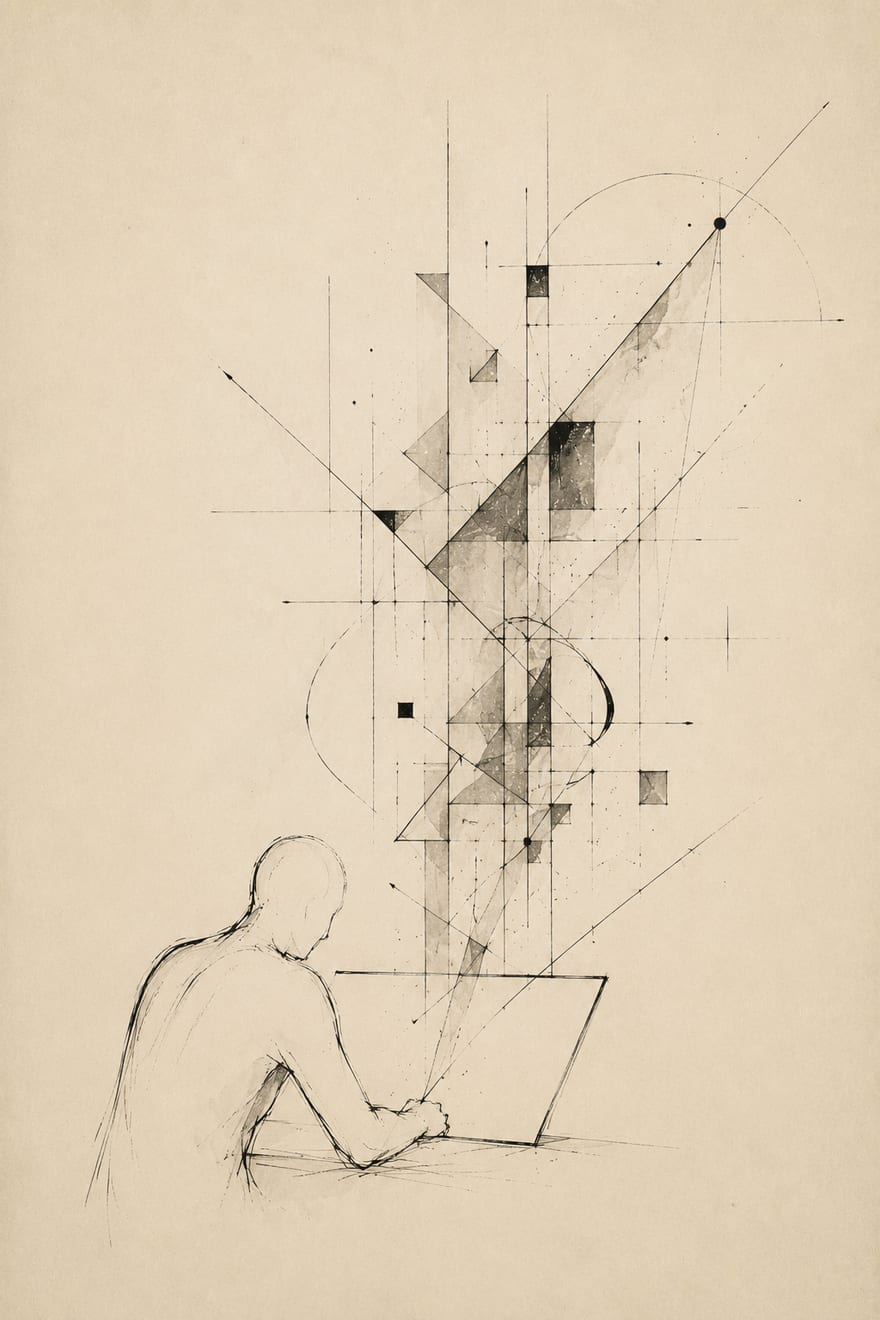
A figure working at a desk beneath a tall geometric construction — the maker shown through the work.
2017

Web design: built the thing itself

The first layer was designing and shipping the thing itself, end to end. This is where the standard for craft got set. It is also where a habit started: judging work by its seams, the unglamorous places where care either shows or it doesn’t.

2019

Data analysis & digital media buying: moved real money against the result

Eight years running marketing by hand: budgets, analytics, media buying, accountable for the outcome with a client’s money on the line. This is the layer most people building AI agents have never worked. They can wire up an API. They have never been on the hook for what a campaign returned. A system that moves ad spend should be built by someone who has had to answer for it.

2019–2025

The years between: operating at scale

Between those layers, the years of running multi-client operations taught me what later became the system spec. What an autonomous operator has to handle. Where governance has to live. Why escalation tiers are non-negotiable. What 'verify before next step' actually means when client spend is on the line. The systems did not emerge from theory — they emerged from operating long enough to know what they needed to do, and from being the one accountable when they failed.

2025

Agentic engineering: built the systems that now run it autonomously

The current layer is autonomous systems that produce the work, not briefs about it. It is six months old, built on top of the decade beneath it, which is exactly why it came together so fast. The runway came first. The systems run on it, and what they execute, they execute to standards that were set long before they existed.

How I work

Probe before dispatch. Verify before the next step. Treat recall as suspect — read the current state of the system, not the remembered state. The discipline reduces rework for everyone, not just throughput for me.

The most useful mode for AI work is hands-on: directing a model the way one would direct a senior colleague, expecting pushback when the reasoning is wrong, holding the standard even when it slows the work down. The output is work worth shipping, not a pile of drafts to fix.

Direct in communication. Surface honest tradeoffs rather than smooth them. Say 'I do not know' when the answer is not in hand, and find out before acting. Carry the weight of decisions instead of distributing it.

Most of what looks like speed is just not doing the work twice.

Outside the work: building my own D&D setting and campaign on World Anvil, playing Magic the Gathering competitively online, and perennially watching the Cleveland Browns lose with dignity. The systems-thinking habits do not switch off at the end of the day, they just point at different problems.

What’s next

The decade above is the runway. The next chapter is doing this work inside a real engineering organization, building agentic systems and AI infrastructure as part of a team carrying the same standard.

Contact

The direct line to Jeremiah is admin@jbfehrle.com. No form, no funnel.

About · Jeremiah Fehrle